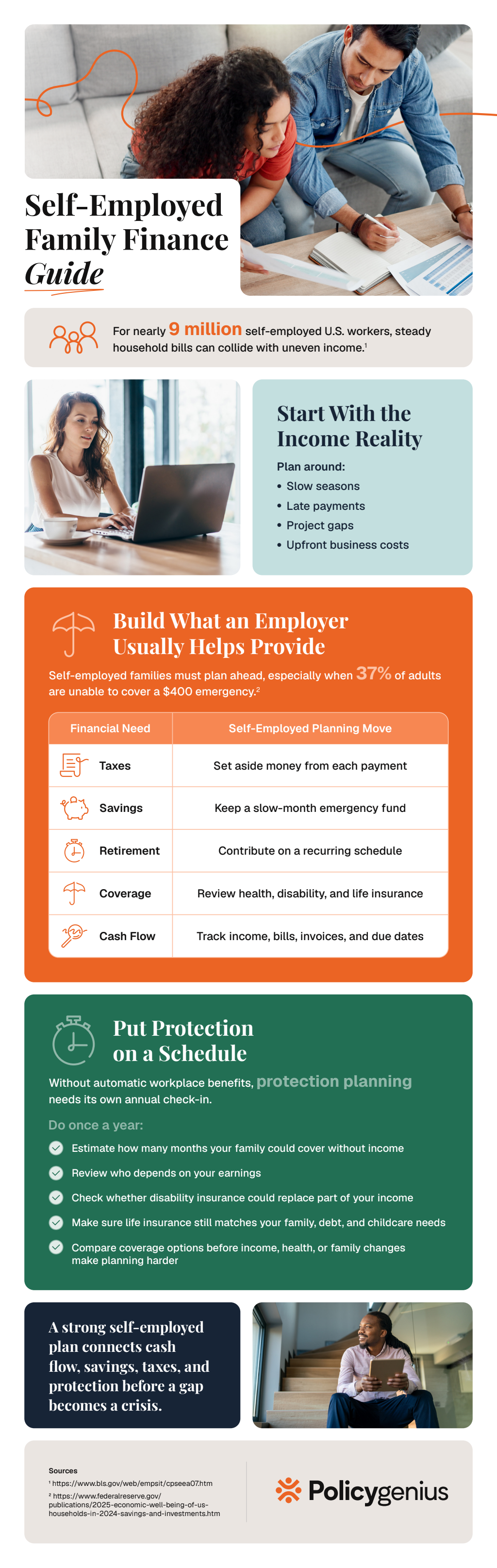
Self-employment offers opportunities that traditional employment often cannot. The ability to control your schedule, choose your clients, and shape your professional future can create greater flexibility for family life. At the same time, managing household finances becomes more complex when there is no employer handling benefits, tax withholding, or retirement contributions behind the scenes.
For self-employed families, financial success often comes down to creating systems that bring consistency to an income stream that may be anything but consistent. The goal is not to eliminate uncertainty. It is to build a framework that helps the household remain stable regardless of how business revenue fluctuates throughout the year.
Turn Irregular Income Into Predictable Cash Flow
One of the most effective financial habits for self-employed households is creating a consistent income strategy. Revenue may arrive in large project payments, seasonal cycles, or uneven monthly amounts, but household expenses rarely operate that way.
Many families benefit from establishing a regular “paycheck” from the business. Instead of transferring funds whenever money comes in, a set amount is moved into personal accounts on a predetermined schedule. This approach creates more predictable cash flow and makes budgeting easier.
It also encourages business owners to view income strategically rather than reacting to each payment as it arrives.
Build Financial Buffers Into the System
Financial flexibility becomes especially important when income depends on clients, contracts, or project-based work. Even successful businesses can experience delays in payment, seasonal slowdowns, or unexpected changes in demand.
Creating dedicated reserves can help absorb these fluctuations. In addition to emergency savings, self-employed families often benefit from maintaining separate accounts for taxes, business expenses, and future investments. By setting aside funds consistently, households can avoid scrambling when larger obligations arise.
Planning ahead for predictable but infrequent expenses helps reduce financial stress and improve decision-making during slower periods.
Think Beyond Monthly Expenses
Many financial challenges faced by self-employed families stem from focusing only on immediate needs. While covering monthly bills is important, long-term planning deserves equal attention.
Retirement savings, future education costs, major purchases, and business growth initiatives all require intentional funding. Without automatic payroll deductions or employer-sponsored plans, these goals can easily fall behind if they are not built into the financial process.
Regular contributions, even modest ones, can help create momentum toward larger objectives while reducing the temptation to postpone planning until a more convenient time.
Protect What the Business Supports
For many self-employed households, the business serves as the primary engine supporting the family’s lifestyle. Protecting that income stream is an important part of any financial strategy.
Emergency funds provide short-term protection, but larger risks may require additional planning. Disability insurance can help replace income if an illness or injury interrupts the ability to work. Life insurance can provide financial support to surviving family members if a primary earner is no longer there to contribute.
The appropriate level of protection will vary from one family to another, but reviewing coverage regularly helps ensure it continues to reflect current circumstances.
Adjust as Life Evolves
Financial planning is not a one-time exercise. As businesses grow and families change, priorities often shift as well.
A new home, growing children, expanded business operations, or increased income can all create new financial considerations. Reviewing savings goals, insurance coverage, debt obligations, and investment strategies periodically allows families to adapt before challenges emerge.
The most effective plans are flexible enough to evolve alongside the household they support.
Creating Confidence Through Organization
Self-employment comes with unique rewards, but it also requires a greater degree of financial ownership. Families that establish clear systems for managing income, saving for the future, and preparing for uncertainty are often better positioned to weather fluctuations and pursue long-term goals.
Rather than relying on perfect income consistency, successful self-employed households focus on creating structure around the income they earn. With thoughtful planning and disciplined habits, it is possible to build both financial security and the flexibility that makes self-employment appealing in the first place.
For a closer look at building a family finance plan around self-employed income, explore the accompanying resource.